

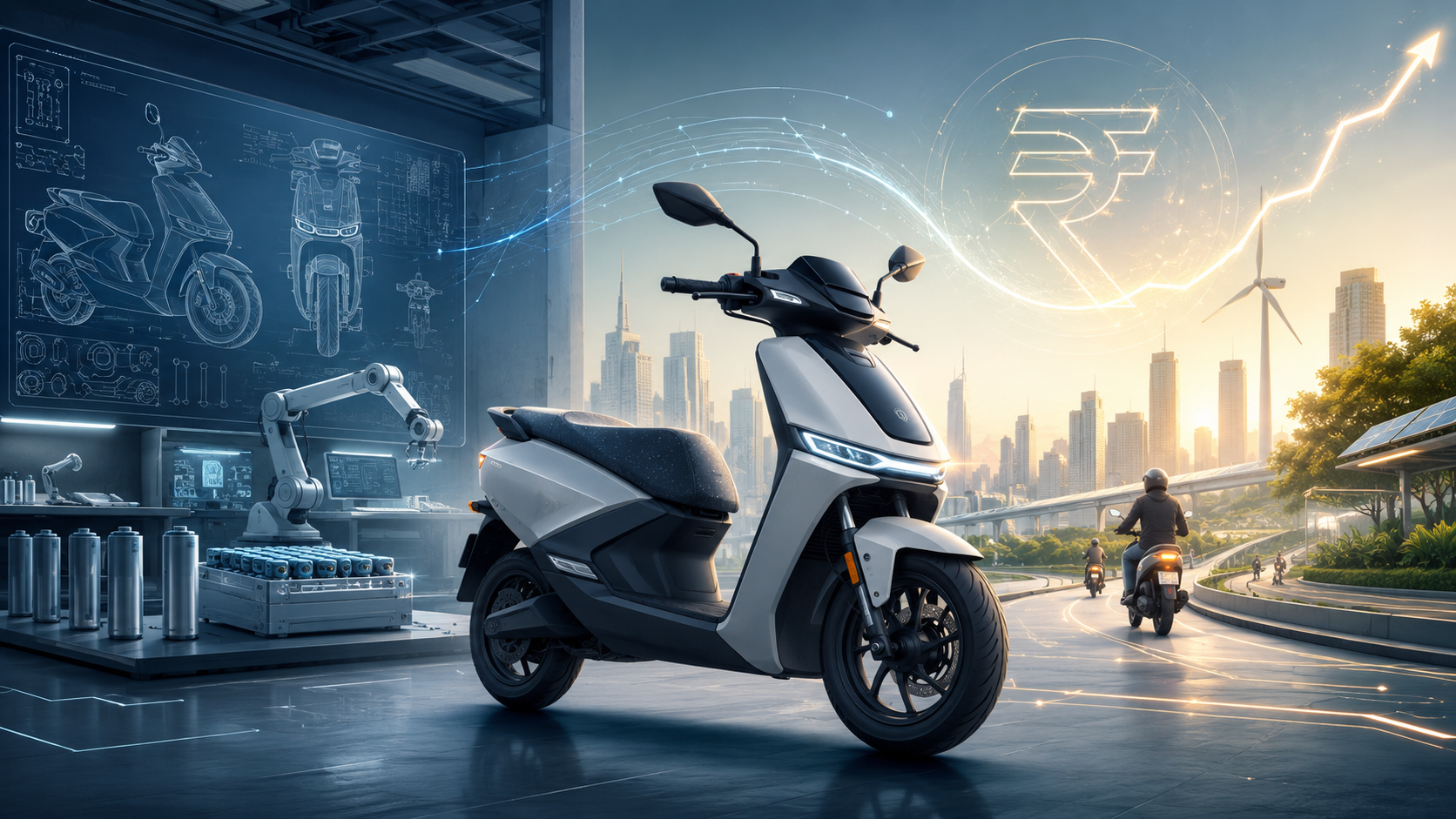
India’s electric two-wheeler market is entering a sharper, more demanding phase. The early excitement around electric scooters has now matured into a race for scale, technology, localisation, and long-term financial endurance. In this changing landscape, Ather Energy is looking beyond conventional incentives and turning toward the government’s ₹1-trillion Research, Development and Innovation scheme to support its next stage of growth.
For Ather, this is not just about raising money. It is about finding the kind of patient, affordable capital that can help an electric vehicle company build platforms, batteries, software, and future-ready products without being forced to focus only on short-term sales momentum.
A Strategic Search for Low-Cost Innovation Capital
Ather Energy is reportedly working to access funding under the government’s RDI scheme, which is designed to support research-led projects with commercial potential. The scheme could offer the company low-interest, long-term debt at rates far below typical market borrowing costs.
This matters because electric vehicle development is capital-intensive. A company cannot build competitive EVs merely by assembling components or launching new models quickly. It needs to invest continuously in battery systems, power electronics, vehicle platforms, software, energy management, supply chains, testing, and localisation.
For a company like Ather, which has built its identity around engineering-led products, such funding could provide important breathing space. It may help the company continue investing in long-term technology while also managing the pressure of a highly competitive market.
Why the RDI Scheme Comes at the Right Time
The timing is significant. Ather is developing its new EL platform as well as a separate electric motorcycle platform. These projects are not minor upgrades; they represent the company’s attempt to widen its product base and move into new customer segments.
The electric scooter market has already become crowded, with established two-wheeler makers and EV-first players competing aggressively on price, features, range, distribution, and after-sales support. Motorcycles, meanwhile, open a much larger and more complex opportunity in India, where commuter bikes dominate everyday mobility.
Building an electric motorcycle that can appeal to Indian riders will require more than a battery and motor. It will need the right mix of performance, affordability, durability, charging convenience, design, and trust. That makes R&D funding especially valuable.
The PLI Gap and the Competitive Challenge
Ather’s interest in the RDI scheme also reflects a broader policy challenge. Several of its rivals continue to benefit from the production-linked incentive framework for the automobile sector. These incentives can create a meaningful advantage by supporting companies that meet the eligibility conditions.
Ather, however, has not yet been able to access those benefits because of the scheme’s strict entry requirements. This has created an uneven playing field in a market where cost structures matter deeply. Incentives can influence pricing, expansion, localisation, and the speed at which companies invest in future products.
In this context, the RDI scheme could become an alternative support route. While it may not replace sales-linked incentives, it could help Ather fund the deeper technology work that determines long-term competitiveness.
From Scooter Maker to Technology Platform Company
Ather’s story has always been closely linked with product experience. Its scooters helped establish a premium, tech-focused identity in India’s EV market. But the next phase will likely demand more than strong scooters.
The company now has to prove that it can scale, reduce losses, expand its portfolio, and build platforms that can support multiple products. Its recent financial performance shows improving momentum, with revenue growth, higher volumes, and narrower losses. That progress gives the company a stronger foundation, but it also raises expectations.
Investors, customers, and policymakers will be watching whether Ather can turn engineering strength into a broader mobility business. The RDI scheme could support that transition by giving the company more room to invest in technologies that may not pay off immediately but could shape its future product pipeline.
Why Patient Capital Is Critical for EV Companies
Electric mobility is not a short-cycle business. Product development takes time. Battery systems must be tested thoroughly. Software needs constant refinement. Charging ecosystems need reliability. Local components need supplier maturity. Safety, cost, performance, and user experience all have to evolve together.
This is why patient capital is so important. Affordable long-term funding allows companies to work on core capabilities instead of chasing only near-term volume. In a market like India, where affordability is central, technology investment can eventually help reduce costs and improve product quality.
For Ather, this could mean deeper work on battery efficiency, platform flexibility, connected features, indigenous components, and future vehicle categories. These are the areas that can separate a durable EV company from a short-lived market participant.
A Bigger Signal for India’s EV Ecosystem
Ather’s move also highlights the changing nature of India’s EV policy environment. As the market matures, support may need to move beyond manufacturing incentives alone. India’s ambition in electric mobility depends not only on producing vehicles at scale but also on building original technology, domestic intellectual property, and globally competitive engineering capabilities.
The RDI scheme is important because it focuses on innovation rather than only output. If implemented effectively, it could encourage companies to invest in technologies that are designed in India, built for Indian conditions, and eventually adaptable for global markets.
This could be especially useful for EV-first companies that may not have the balance sheets of legacy automakers but are often deeply involved in new-age product development.
The Road Ahead for Ather
The next few years could be decisive for Ather Energy. The company has already established itself as one of India’s leading electric two-wheeler players, but the next challenge is tougher: scaling profitably while continuing to innovate.
Its planned platforms could help it reach new buyers and compete across a wider market. But success will depend on execution, cost discipline, manufacturing strength, supplier partnerships, and the ability to keep products attractive in a fast-changing industry.
Access to low-cost R&D funding could strengthen its hand. It may not solve every challenge, but it can give Ather more flexibility at a time when innovation, localisation, and capital efficiency are all becoming critical.
Conclusion: Ather’s Bet on Innovation-Led Growth
Ather Energy’s pursuit of support under the ₹1-trillion RDI scheme signals a clear strategic direction. The company is not simply looking for financial relief; it is trying to secure resources for the next layer of EV growth.
In a market increasingly shaped by policy incentives, pricing pressure, and technological ambition, Ather’s future will depend on how well it converts research investment into commercial products. If the funding comes through and the company executes well, it could help Ather move from being a strong electric scooter brand to a broader EV technology player.
India’s electric mobility story is no longer just about who can sell the most vehicles today. It is also about who can build the strongest technology foundation for tomorrow. For Ather, the RDI scheme may become an important piece of that journey.
Feel free to share your experiences and insights in the comments below. Let’s continue the conversation and grow together as a community of traders and analysts.
By sharing this experience and insights, I hope to contribute to the collective knowledge of our professional community, encouraging a culture of strategic thinking and informed decision-making.
As always, thorough research and risk management are crucial. The dynamic nature of financial markets demands vigilance, agility, and a deep understanding of the tools at your disposal. Here’s to profitable trading and navigating the election season with confidence!
Ready to stay ahead of market trends and make informed investment decisions? Follow our page for more insights and updates on the latest in the financial world!
For a free online stock market training by Yogeshwar Vashishtha (M.Tech IIT) this Saturday from 11 am – 1 pm, please sign up with https://pathfinderstrainings.in/training/freetrainings.aspx
Experience profits with my winning algo strategies – get a free one-month trial with ₹15 lakh capital! – https://terminal.algofinders.com/algo-terminal
Disclaimer
This article should not be interpreted as investment advice. For any investment decisions, consult a reputable financial advisor. The author and publisher are not responsible for any losses incurred by investors or traders based on the information provided.