

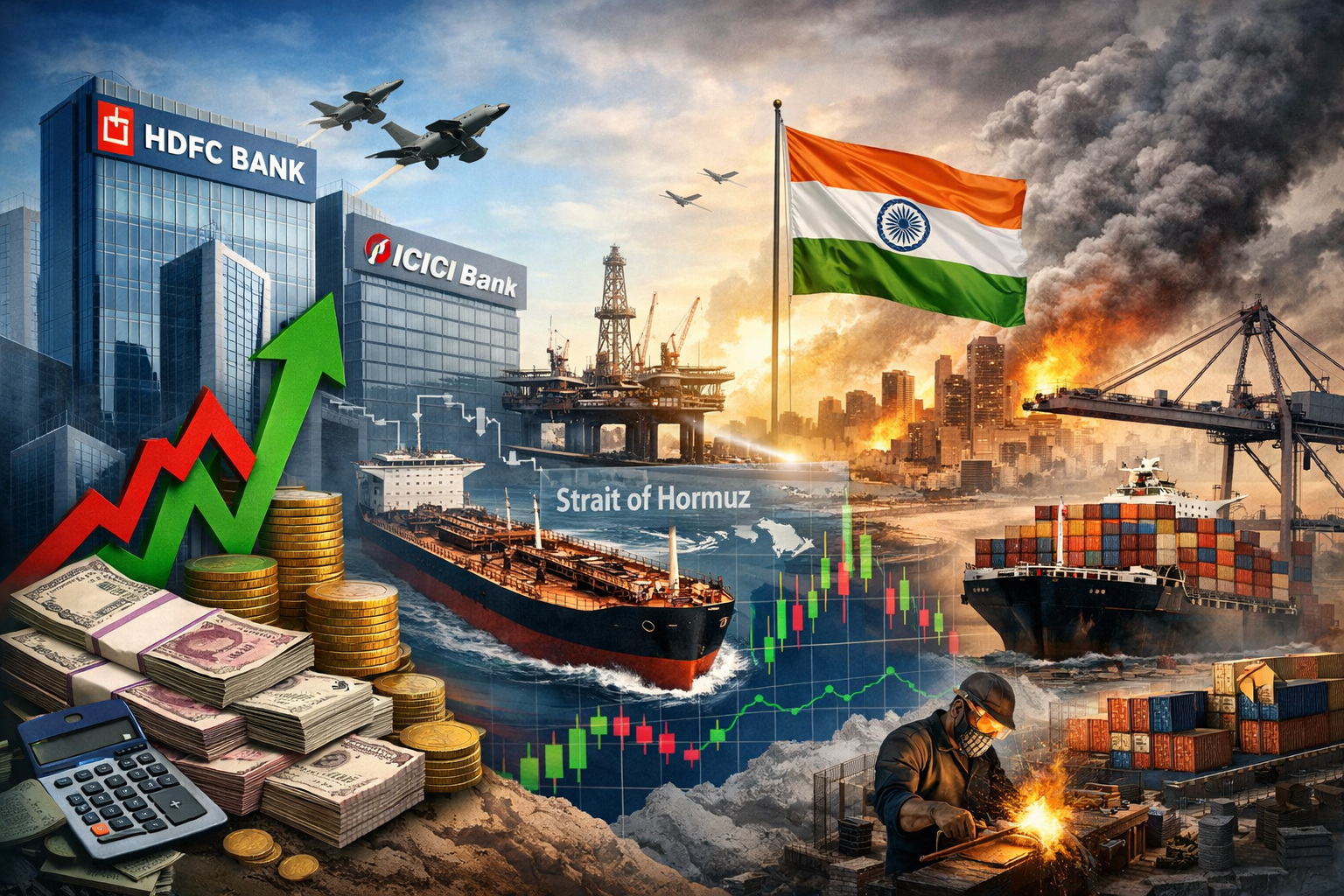
India’s leading private sector banks have just delivered a quarter of solid financial performance, reflecting the resilience of the country’s domestic economy. Yet beneath the strong numbers lies a more cautious tone about the future. With geopolitical tensions in West Asia threatening global stability, banking leaders are increasingly balancing optimism with vigilance as they look toward fiscal year 2027.
Strong Growth Anchored in Domestic Momentum
The latest quarterly results from major lenders like HDFC Bank and ICICI Bank highlight a banking sector that continues to expand at a healthy pace.
HDFC Bank reported a 12% year-on-year growth in loans, reaching ₹29.6 trillion by March 2026, while deposits rose even faster at 14% to ₹31 trillion. Similarly, ICICI Bank posted robust growth, with loans increasing 15.8% to ₹15.5 trillion and deposits climbing 11.4% to ₹17.9 trillion.
These numbers reflect strong domestic demand, supported by steady consumption, improving corporate balance sheets, and a relatively stable interest rate environment. For now, India’s internal growth engine appears to be holding firm.
A Shadow of Uncertainty: The West Asia Conflict
Despite the positive momentum, bank leaders are wary of emerging global risks—particularly the ongoing conflict in West Asia. The geopolitical tensions have introduced uncertainty into global supply chains, commodity markets, and investor sentiment.
One key concern is the Strait of Hormuz, a critical passage for nearly 20% of the world’s oil supply. Any disruption here could lead to rising oil prices, increased inflation, and broader economic stress.
Research analysts have described the situation as creating “multiple vortexes of headwinds,” affecting sectors ranging from agriculture to MSMEs (Micro, Small, and Medium Enterprises). These ripple effects could eventually influence credit demand, repayment capacity, and overall economic growth.
HDFC Bank: Growth with Cautious Calibration
HDFC Bank’s leadership remains confident but measured. CEO Sashidhar Jagdishan emphasized that while growth momentum is positive, predicting the future trajectory has become more difficult.
He noted that:
- The direct impact of geopolitical tensions has been minimal so far
- Some disruption has been observed among clients, particularly in MSME segments
- Any stress is likely to be temporary and concentrated in the first quarter
The bank plans to “calibrate” its growth strategy based on evolving macroeconomic indicators, signaling a flexible and responsive approach rather than aggressive expansion.
ICICI Bank: Optimism Rooted in Domestic Strength
ICICI Bank presents a slightly more optimistic outlook, especially regarding domestic credit growth. Executive Director Sandeep Batra highlighted that the bank has not yet seen any material impact on its portfolio.
However, he acknowledged the uncertainty ahead, noting that future outcomes will depend on factors such as:
- Liquidity conditions
- Competitive intensity
- Deposit rates
- Geopolitical developments
Importantly, ICICI Bank expects India’s GDP to continue growing in FY27, albeit with some moderation. This suggests that while global risks may dampen growth, they are unlikely to derail it entirely.
MSMEs and Export Sectors: The Vulnerable Links
Across the banking sector, there is a shared concern about the vulnerability of MSMEs and export-oriented businesses.
These segments are more exposed to:
- Supply chain disruptions
- Fluctuating global demand
- Rising input costs due to inflation
Banks are closely monitoring these portfolios for early signs of stress. While current resilience is encouraging, prolonged geopolitical instability could lead to second-order effects, including delayed repayments and reduced borrowing.
Industry-Wide Vigilance: A Common Theme
Other lenders, such as Yes Bank, echo this cautious stance. While no immediate impact has been observed, banks are conducting detailed impact assessments and closely tracking their loan books.
The broader sentiment across the sector can be summarized as “cautious optimism”:
- Growth remains strong and supported by domestic fundamentals
- External risks are real but not yet disruptive
- Continuous monitoring and adaptability are key
Emerging Opportunities Amid Challenges
Interestingly, the current global uncertainty is also creating new opportunities for India.
Analysts point to:
- GIFT City emerging as an alternative financial hub to Middle Eastern centers
- India’s potential to develop as a global aviation transit hub
- Increased investor interest in diversifying away from conflict-prone regions
These developments could strengthen India’s position in the global financial ecosystem over the long term.
Conclusion: Balancing Growth and Prudence
India’s private banks are navigating a delicate phase—one where strong domestic growth coexists with unpredictable global risks. The latest earnings underline their resilience, but also their readiness to adapt.
As fiscal 2027 approaches, the path forward will depend heavily on how geopolitical tensions evolve. For now, the strategy is clear: continue growing, but stay alert.
Key Takeaways:
- Indian private banks reported strong loan and deposit growth in Q4 2026
- Domestic demand remains robust, supporting credit expansion
- The West Asia conflict introduces uncertainty, especially for MSMEs and exports
- Banks are adopting a cautious yet optimistic outlook for FY27
- Emerging global shifts may create new opportunities for India
In a world of shifting dynamics, India’s banking sector is proving that steady hands and strategic caution can go hand in hand with growth.
Feel free to share your experiences and insights in the comments below. Let’s continue the conversation and grow together as a community of traders and analysts.
By sharing this experience and insights, I hope to contribute to the collective knowledge of our professional community, encouraging a culture of strategic thinking and informed decision-making.
As always, thorough research and risk management are crucial. The dynamic nature of financial markets demands vigilance, agility, and a deep understanding of the tools at your disposal. Here’s to profitable trading and navigating the election season with confidence!
Ready to stay ahead of market trends and make informed investment decisions? Follow our page for more insights and updates on the latest in the financial world!
For a free online stock market training by Yogeshwar Vashishtha (M.Tech IIT) this Saturday from 11 am – 1 pm, please sign up with https://pathfinderstrainings.in/training/freetrainings.aspx
Experience profits with my winning algo strategies – get a free one-month trial with ₹15 lakh capital! – https://terminal.algofinders.com/algo-terminal
Disclaimer
This article should not be interpreted as investment advice. For any investment decisions, consult a reputable financial advisor. The author and publisher are not responsible for any losses incurred by investors or traders based on the information provided.