

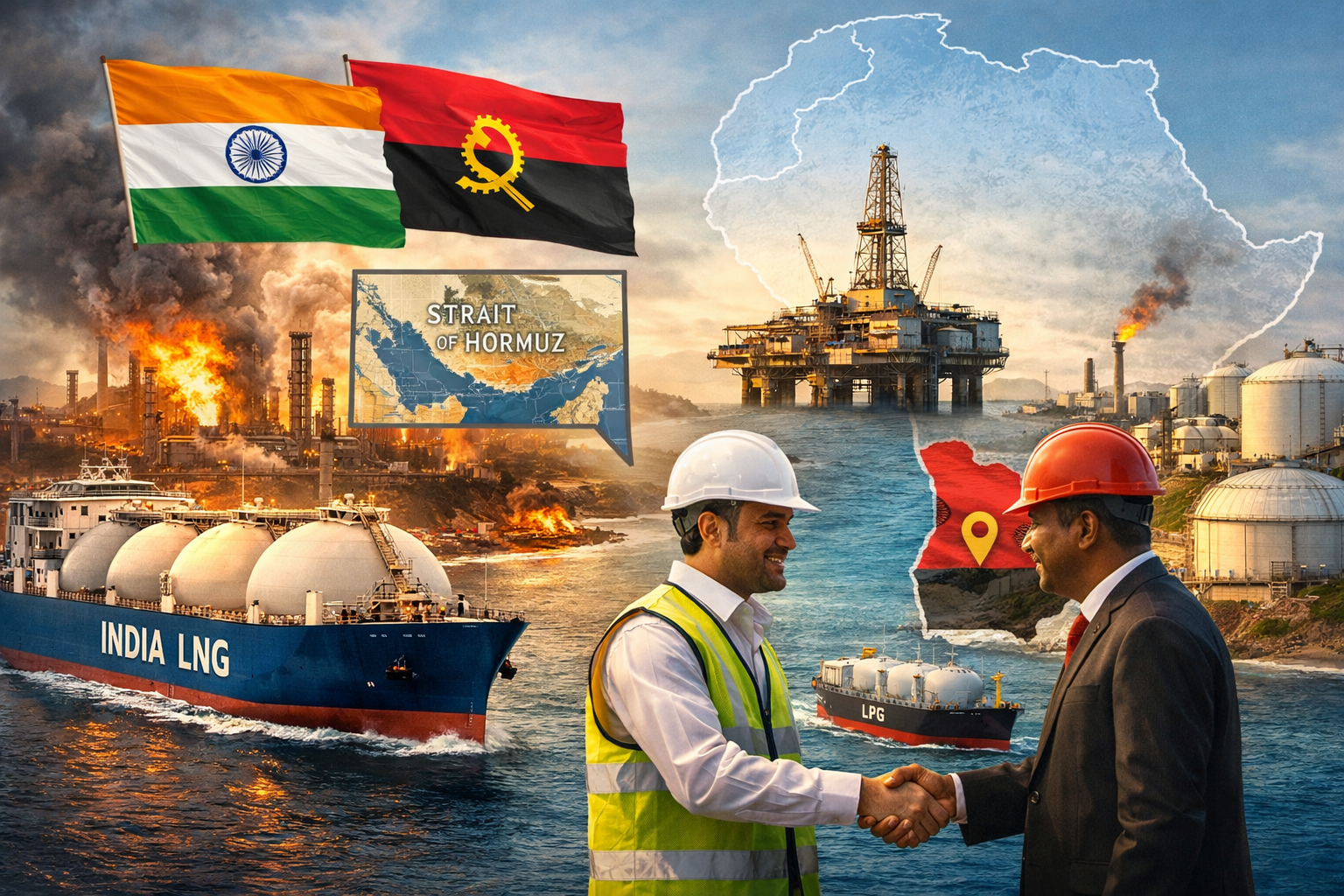
The global energy landscape has been thrust into uncertainty as geopolitical tensions in West Asia disrupt critical supply routes. For India, a nation heavily reliant on imported cooking gas and natural gas, the closure of the Strait of Hormuz during the Iran war has triggered an urgent search for alternatives. In response, four of India’s leading state-run energy giants have begun exploring a strategic partnership with Angola—marking a potential shift in the country’s energy sourcing strategy.
A Strategic Move by India’s Energy Majors
India’s top public-sector oil and gas companies—Indian Oil Corporation (IOC), Bharat Petroleum Corporation Ltd. (BPCL), Hindustan Petroleum Corporation Ltd. (HPCL), and GAIL (India) Ltd.—are currently in preliminary discussions with Angola’s national oil company, Sonangol.
The objective is clear: secure long-term supplies of liquefied petroleum gas (LPG) and liquefied natural gas (LNG) through term contracts rather than volatile spot markets. While these discussions are still at an early stage, they are happening both at the government-to-government level and between the companies themselves, signaling strong intent.
If finalized, this would mark a significant milestone—particularly for LPG—as it could be the first time Angola supplies cooking gas to India.
The Crisis Trigger: Strait of Hormuz Closure
The Strait of Hormuz is one of the world’s most critical energy chokepoints, facilitating a substantial portion of global oil and gas trade. Its closure has had immediate and severe consequences:
- Around 90% of India’s LPG imports have been disrupted
- LNG supplies from key West Asian countries like Qatar and the UAE are halted
- India’s dependency is exposed:
- ~60% of LPG demand is met through imports
- ~50% of natural gas consumption relies on imported LNG
The ripple effects are already visible. The government has imposed restrictions on LPG bookings—25 days in urban areas and 45 days in rural regions—to manage shortages.
Angola: A Promising Alternative
Angola, a Central African nation rich in hydrocarbon resources, is emerging as a viable alternative for India. With proven natural gas reserves of approximately 4.6 trillion cubic feet, the country already has an established LNG export base.
There are several reasons why Angola is attractive:
- Geographical advantage: Supplies from Africa can arrive 10–15 days faster than shipments from North America
- Integrated gas production: Natural gas extraction yields LPG components like propane and butane
- Existing trade ties: Angola already supplies LNG to India, valued at over $924 million in FY25
This makes Angola not just a stopgap solution, but a potentially strategic long-term partner.
Diversification: The New Energy Imperative
The ongoing crisis has reinforced a key lesson for India—overdependence on a single region is risky. Experts emphasize that diversification is no longer optional; it is essential.
India is now actively exploring multiple supply sources, including:
- Africa (Angola)
- Australia
- Algeria
- Russia
Energy analysts suggest that African suppliers could play a crucial role in bridging both LNG and LPG gaps, especially as global markets tighten.
Long-Term Contracts vs Spot Buying
Indian companies are reportedly considering:
- 1-year contracts for LPG
- Minimum 10-year contracts for LNG
This shift toward long-term agreements reflects a desire for stability in pricing and supply—especially in a volatile geopolitical environment.
Impact on Indian Industries
The gas shortage is not just a household concern—it has broader economic implications:
- Fertilizer sector: Dependent on natural gas as a key input
- Steel industry: Uses gas in production processes
- City gas distribution: Faces supply disruptions
Additionally, force majeure declarations by major players like QatarEnergy and Petronet LNG have further strained supply chains.
Rethinking Energy Security
The current crisis may lead to a fundamental rethink of India’s energy strategy. Experts argue that countries may need to:
- Accept higher costs for diversified sourcing
- Invest in energy infrastructure resilience
- Reduce dependence on imports over the long term
The idea of “cheap and concentrated supply” is giving way to “secure and diversified supply.”
Government’s Immediate Response
The Indian government has taken proactive steps to manage the situation:
- Ensuring continuous availability of petroleum products and LPG
- Facilitating the movement of LPG carriers already en route
- Prioritizing domestic consumption over commercial use
These short-term measures aim to stabilize supply while long-term strategies take shape.
Conclusion: A Defining Moment for India’s Energy Future
India’s outreach to Angola represents more than just a temporary solution—it signals a broader transformation in how the country approaches energy security. The Strait of Hormuz crisis has exposed vulnerabilities but also opened doors for new partnerships and strategic realignments.
As India navigates this challenging phase, one thing is clear: the future of energy lies not just in access, but in adaptability. Diversification, resilience, and long-term planning will define how well the nation weathers global disruptions—and Angola may well become a key chapter in that evolving story.
Feel free to share your experiences and insights in the comments below. Let’s continue the conversation and grow together as a community of traders and analysts.
By sharing this experience and insights, I hope to contribute to the collective knowledge of our professional community, encouraging a culture of strategic thinking and informed decision-making.
As always, thorough research and risk management are crucial. The dynamic nature of financial markets demands vigilance, agility, and a deep understanding of the tools at your disposal. Here’s to profitable trading and navigating the election season with confidence!
Ready to stay ahead of market trends and make informed investment decisions? Follow our page for more insights and updates on the latest in the financial world!
For a free online stock market training by Yogeshwar Vashishtha (M.Tech IIT) this Saturday from 11 am – 1 pm, please sign up with https://pathfinderstrainings.in/training/freetrainings.aspx
Experience profits with my winning algo strategies – get a free one-month trial with ₹15 lakh capital! – https://terminal.algofinders.com/algo-terminal
Disclaimer
This article should not be interpreted as investment advice. For any investment decisions, consult a reputable financial advisor. The author and publisher are not responsible for any losses incurred by investors or traders based on the information provided.