

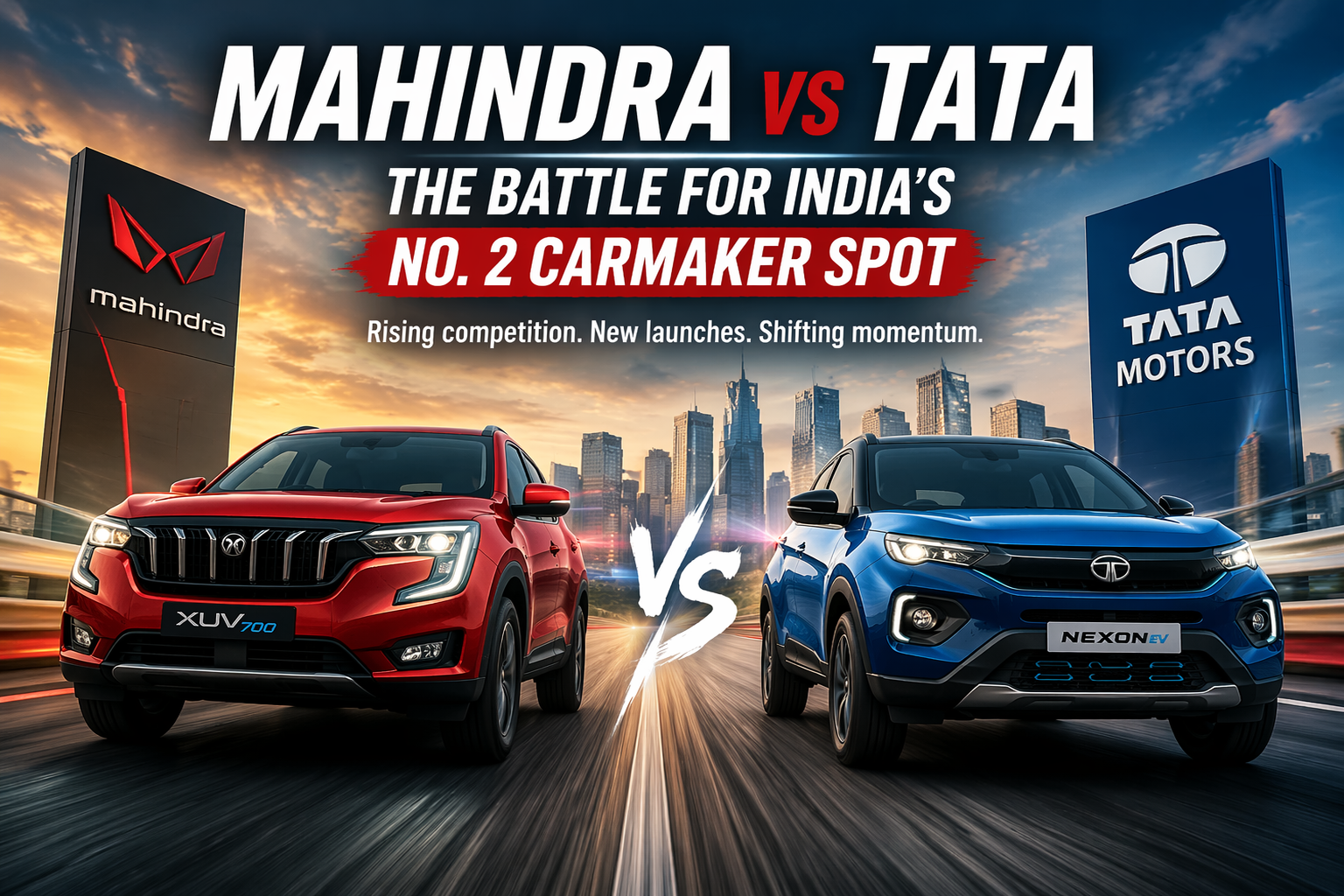
India’s passenger vehicle market is witnessing a fascinating rivalry—one that goes beyond sales numbers and delves into strategy, innovation, and shifting consumer preferences. Mahindra & Mahindra (M&M), which proudly secured the position of India’s second-largest carmaker in FY26, is now facing mounting pressure from Tata Motors Passenger Vehicles (PV), a competitor that is rapidly gaining ground.
Mahindra’s Milestone Year: A Strong but Tested Lead
Mahindra achieved a significant milestone in FY26 by selling over 623,000 vehicles, marking an impressive 22% growth over the previous year. This performance enabled the Mumbai-based automaker to hold onto the coveted No. 2 position in the Indian automotive market, overtaking Hyundai Motor India just a year earlier.
However, while the headline numbers paint a picture of strength, the underlying trend suggests that Mahindra’s hold on this position is becoming increasingly fragile.
The company has remained focused on revenue market share, particularly in the SUV segment, where it continues to dominate. Its leadership has emphasized a long-term vision centered on premium SUVs and customer delight, rather than chasing volume alone.
Tata Motors Gains Momentum Post GST Cuts
The real shift in dynamics began after the government reduced GST on cars from 28% to 18%, a move aimed at boosting demand. Since then, Tata Motors has emerged as the biggest beneficiary of this policy change.
Between September and March, Tata Motors sold approximately 408,000 vehicles, surpassing Mahindra’s 396,000 units during the same period. Even more telling is the consistency—Tata held the No. 2 spot in five out of these seven months, signaling sustained momentum rather than a short-term spike.
This surge highlights Tata’s ability to capitalize on favorable market conditions and align its offerings with evolving consumer demand.
The Power of Portfolio: Tata’s Strategic Advantage
One of the key reasons behind Tata’s rise is its diversified product and powertrain portfolio. Unlike many competitors, Tata has successfully positioned itself across multiple fuel technologies:
- Electric Vehicles (EVs) – Market leader in India
- CNG models – Strong growth contributor
- Petrol and Diesel variants – Catering to traditional segments
This multi-powertrain approach allows Tata to appeal to a broader customer base, reducing dependency on any single segment.
Popular models like the Tata Nexon and Tata Punch have consistently featured among the top-selling cars in India. The Nexon, in particular, has benefited from its presence in the fast-growing compact SUV segment, amplified further by its availability in multiple fuel options.
Additionally, new launches like the Tata Sierra—already clocking 20,000 deliveries in just three months—demonstrate Tata’s aggressive push to expand market share.
Mahindra’s Strategy: Premium SUVs and Brand Strength
Mahindra, on the other hand, continues to play to its strengths—SUV leadership and brand equity. Its strategy revolves around:
- Building high-value, premium SUVs
- Strengthening customer experience
- Focusing on revenue over sheer volume
The company has successfully positioned itself as a leader in SUV revenue share, which remains a critical profitability driver. While Tata is expanding breadth, Mahindra is deepening its dominance in a specific segment.
This divergence in strategy makes the competition even more compelling—breadth vs specialization.
Product Wars Heat Up: Launches and Innovation
Both companies are not slowing down. With multiple new launches, facelifts, and upgrades lined up, the battle is expected to intensify further.
- Tata is betting on design innovation and powertrain diversity
- Mahindra is doubling down on SUV excellence and premium positioning
Analysts are optimistic about both players, predicting that Tata Motors PV and Mahindra will outperform other passenger vehicle manufacturers in the near term.
Market Sentiment and Investor Perspective
Interestingly, despite strong operational performance, both companies have seen declines in their stock prices in recent months:
- Mahindra shares down ~19.7%
- Tata Motors shares down ~17.4%
- Nifty Auto index down ~15%
This suggests that broader market conditions and investor sentiment are playing a role, even as the companies continue to perform well operationally.
The Road Ahead: Who Will Hold the No. 2 Spot?
While Mahindra currently retains its position as India’s second-largest carmaker, Tata Motors is clearly closing the gap—and fast. The competition is no longer about annual sales alone but about monthly consistency, product relevance, and adaptability to market shifts.
If Tata continues its momentum, especially with its strong EV and multi-powertrain strategy, Mahindra may find it increasingly difficult to defend its position. On the other hand, Mahindra’s focused SUV strategy and brand strength could help it maintain its edge in profitability and customer loyalty.
Conclusion: A Rivalry That Benefits the Consumer
The Mahindra vs Tata battle is more than just a corporate rivalry—it’s a win for Indian consumers. As both companies push harder on innovation, pricing, and product quality, buyers stand to benefit from:
- More choices across fuel types
- Better technology and features
- Competitive pricing
The race for No. 2 is far from over—and in many ways, it’s just getting started.
Feel free to share your experiences and insights in the comments below. Let’s continue the conversation and grow together as a community of traders and analysts.
By sharing this experience and insights, I hope to contribute to the collective knowledge of our professional community, encouraging a culture of strategic thinking and informed decision-making.
As always, thorough research and risk management are crucial. The dynamic nature of financial markets demands vigilance, agility, and a deep understanding of the tools at your disposal. Here’s to profitable trading and navigating the election season with confidence!
Ready to stay ahead of market trends and make informed investment decisions? Follow our page for more insights and updates on the latest in the financial world!
For a free online stock market training by Yogeshwar Vashishtha (M.Tech IIT) this Saturday from 11 am – 1 pm, please sign up with https://pathfinderstrainings.in/training/freetrainings.aspx
Experience profits with my winning algo strategies – get a free one-month trial with ₹15 lakh capital! – https://terminal.algofinders.com/algo-terminal
Disclaimer
This article should not be interpreted as investment advice. For any investment decisions, consult a reputable financial advisor. The author and publisher are not responsible for any losses incurred by investors or traders based on the information provided.