

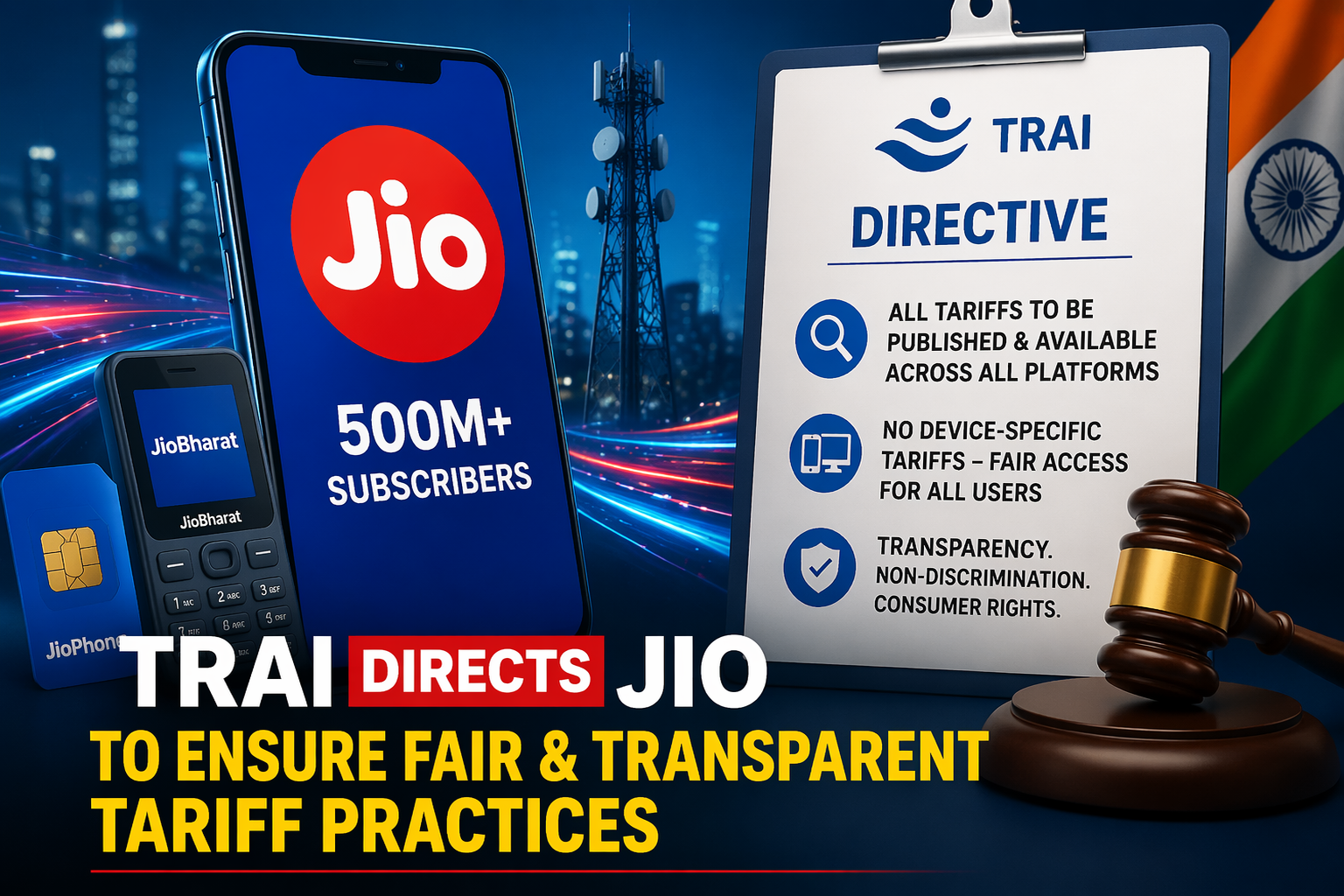
India’s telecom landscape is witnessing a significant moment as the Telecom Regulatory Authority of India (TRAI) takes a firm stand on transparency and fairness in tariff practices. Reliance Jio, the country’s largest telecom operator with over 500 million subscribers, has been directed to revise certain practices that the regulator considers discriminatory and lacking transparency. This development not only impacts Jio but also sets a precedent for the entire telecom industry.
The Core Issue: Transparency and Accessibility of Tariff Plans
At the heart of the matter lies TRAI’s concern that Jio did not make all its tariff plans uniformly available across platforms. Certain special tariff vouchers (STVs)—priced at ₹249, ₹199, and ₹209—were restricted to specific channels like Jio retail stores or the MyJio app. This limited availability created inconsistency in how consumers could access different plans.
TRAI emphasized that tariff plans must be published and accessible across all platforms, including retail outlets, customer care centres, websites, and apps. The regulator views availability and publication as interconnected, meaning that simply listing a plan is not enough—it must also be easily accessible to all users.
Device-Specific Tariffs: A Question of Fairness
Another major concern raised by TRAI is Jio’s device-specific tariff plans, particularly those tied to JioPhone and JioBharat devices. These low-cost 4G feature phones came bundled with exclusive recharge plans not available to users of other devices.
TRAI labeled this practice as discriminatory because it restricts benefits to a specific group of users based on the device they own. This approach can lock consumers into a particular ecosystem, limiting their freedom to switch providers or devices without losing benefits—an issue that directly challenges the principle of consumer choice.
TRAI’s Directives to Jio
To address these concerns, TRAI has issued two clear directives to Reliance Jio:
1. Universal Availability of Tariff Plans
Jio must ensure that all its tariff offerings, including special vouchers, are available across every platform—offline and online.
2. Removal of Device Restrictions
Tariff plans currently exclusive to JioPhone and JioBharat users must be restructured and made accessible to users on all devices.
The company has been given a deadline to comply, signaling the regulator’s urgency in enforcing these changes.
Jio’s Defense: “Intelligible Criteria”
Reliance Jio has defended its practices by stating that its tariff offerings are based on “intelligible criteria” and are not arbitrary. The company argued that the regulations focus on tariff publication rather than where or how plans are sold.
However, TRAI rejected this argument, asserting that restricting availability forces consumers to visit multiple channels for different services, which goes against the spirit of fair and transparent telecom practices.
Implications for Consumers
This regulatory intervention is ultimately aimed at protecting consumer interests. Here’s what it means for users:
- Greater Transparency: All plans will be visible and accessible in one place.
- Equal Access: No more exclusive deals limited to specific platforms or devices.
- Improved Convenience: Users won’t need to switch between apps or stores to find the best plan.
- Enhanced Freedom: Reduced risk of being locked into a specific device ecosystem.
Industry-Wide Impact
While the directive is targeted at Jio, its implications extend across the telecom sector. Other operators will likely reassess their tariff strategies to ensure compliance with TRAI’s principles of transparency and non-discrimination.
This could lead to:
- Standardized tariff disclosures across companies
- Reduced use of exclusive or hidden plans
- Increased competition based on service quality rather than access restrictions
Conclusion: A Step Toward a Fairer Telecom Ecosystem
TRAI’s action against Reliance Jio marks a critical step toward ensuring fairness and transparency in India’s telecom sector. By addressing both platform-based restrictions and device-specific pricing, the regulator is reinforcing consumer rights and promoting a more competitive marketplace.
For users, this means simpler choices and better access. For telecom companies, it’s a reminder that innovation must go hand in hand with fairness.
Takeaway: The future of telecom in India is not just about faster data and wider coverage—it’s about transparency, equality, and empowering the consumer.
Feel free to share your experiences and insights in the comments below. Let’s continue the conversation and grow together as a community of traders and analysts.
By sharing this experience and insights, I hope to contribute to the collective knowledge of our professional community, encouraging a culture of strategic thinking and informed decision-making.
As always, thorough research and risk management are crucial. The dynamic nature of financial markets demands vigilance, agility, and a deep understanding of the tools at your disposal. Here’s to profitable trading and navigating the election season with confidence!
Ready to stay ahead of market trends and make informed investment decisions? Follow our page for more insights and updates on the latest in the financial world!
For a free online stock market training by Yogeshwar Vashishtha (M.Tech IIT) this Saturday from 11 am – 1 pm, please sign up with https://pathfinderstrainings.in/training/freetrainings.aspx
Experience profits with my winning algo strategies – get a free one-month trial with ₹15 lakh capital! – https://terminal.algofinders.com/algo-terminal
Disclaimer
This article should not be interpreted as investment advice. For any investment decisions, consult a reputable financial advisor. The author and publisher are not responsible for any losses incurred by investors or traders based on the information provided.