

There’s a particular kind of silence that follows a big whistle—when the game pauses, the crowd inhales, and everyone waits to see what happens next. For Dream11, that whistle wasn’t on a pitch. It came from regulation: a real-money gaming ban that punched a hole straight through the company’s core engine. The fantasy gaming giant—once synonymous with building virtual cricket teams and chasing cash prizes—now finds itself in a different match entirely.
And instead of doubling down on contests, Dream11 is changing the sport it plays.
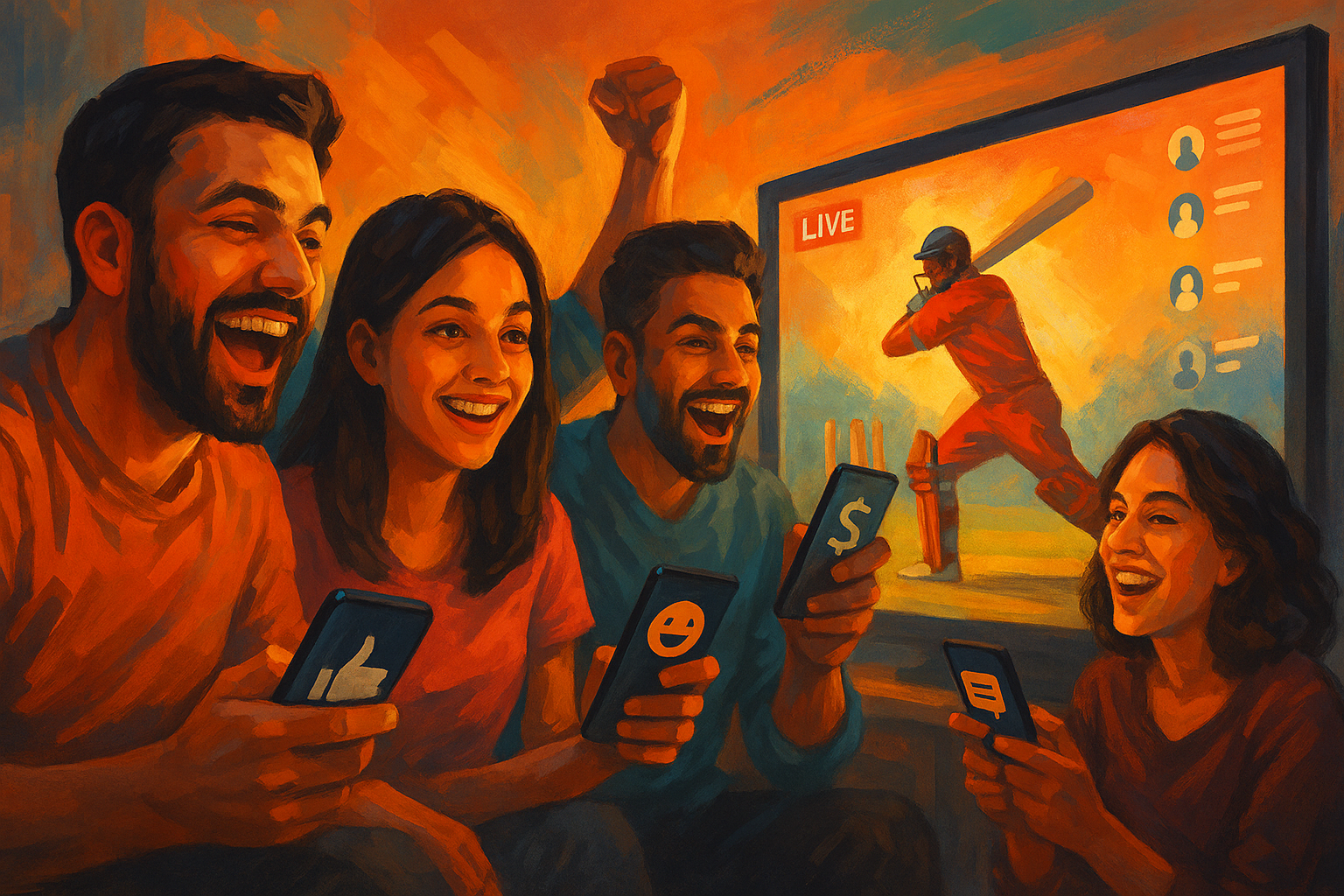
It wants to become a sports entertainment platform built for a new Indian habit: the watch party. Not the living-room gathering with chips and cable TV, but the online version—fans streaming matches, chatting, reacting, and hanging out together in real time. Where watching sports isn’t only about the ball, but also about the banter. Where the match is the main screen, and the community is the real show.
The Pivot: Not Playing Around Cricket—Watching Around It
Dream11 has always been rooted in cricket. But for years, it approached the sport sideways: not as a broadcaster or a viewing destination, but as a parallel economy. Users built fantasy teams, scored points based on real match outcomes, and competed for cash rewards. Football, kabaddi, basketball—these arrived later. Cricket remained the sun; everything else orbited it.
The new shift is more radical than it sounds.
Dream11 isn’t entering sports for the first time. It’s switching from a participation-first experience to an engagement-first experience—from fantasy contests to social viewing. The product isn’t “build a team and win money.” The product becomes “watch together, react together, belong together.”
It’s a move that recognizes a modern truth: sports fandom is increasingly communal online. Not just in stadiums and group chats, but in creator-led spaces where reactions, jokes, tactics, and emotional meltdowns are all part of the entertainment package.
The Silicon Valley Blueprint: India’s Twitch Moment?
If the new Dream11 pitch feels familiar, that’s because it borrows from a proven playbook.
Twitch—acquired by Amazon for $970 million in 2014—built a global ecosystem where gamers broadcast themselves, audiences interact live, and creators monetize engagement. Viewers don’t just watch gameplay; they watch people watching gameplay. The personality becomes the channel; the chat becomes the crowd; the community becomes the moat.
Dream11’s bet is that India’s sports viewing can follow a similar arc.
Cricket already has the ingredients: massive viewership, obsessive fandom, and high emotional volatility—perfect fuel for reaction-led content. The second screen is already common: Twitter, WhatsApp, Instagram stories, YouTube highlights, meme pages. Dream11 wants to institutionalize that behavior—turn it into a destination, not a scattered trail.
How Big Is Dream11’s Sports Footprint, Really?
Dream11’s brand presence has travelled farther than many casual users realize. It has been the official fantasy partner of leagues like the Caribbean Premier League, held naming rights for New Zealand’s Super Smash, and has been associated with Australia’s Big Bash ecosystem. It also partnered with the International Cricket Council in 2018.
Outside cricket, Dream11 has plugged into multiple sports properties—Indian Super League, Pro Kabaddi League, basketball tournaments—and even played a role in launching the NBA’s official fantasy game in India back in 2017. It has also forged ties with the International Hockey Federation.
In India, its mainstream visibility peaked when it landed a three-year, ₹358-crore lead sponsorship deal with the BCCI in July 2023—only to exit after the ban arrived, forcing the board back into sponsor-hunting mode.
That history matters because it shows Dream11 isn’t trying to discover sports. It’s trying to repackage its relationship with sports—from fantasy mechanics to fan mechanics.
The Monetization Question: Can Watch Parties Print Money?
Fantasy gaming had a clear, proven revenue engine: entry fees, cash contests, repeat play. A watch-party platform is a different beast entirely. It’s typically free at the top, and it earns money later, through volume and behavior.
Dream11’s new model leans on three levers:
- Advertising
- Micro-payments
- Paid interactions with creators (like shout-outs or engagement perks)
CEO Harsh Jain frames the opportunity as enormous: Dream11 pegs the total addressable market for sports engagement at $10 billion in revenue, with over a billion sports enthusiasts globally.
But this is the hard part: monetization may be slow, especially at the start. Digital advertising in India is already a large pool (around $16 billion), but free platforms often sit at the top of the funnel—lots of reach, slower growth in revenue per user.
Dream11’s initial plan reflects that reality: start with tiny, easy payments—₹3–10 for a shout-out or interaction—then scale through India’s smooth digital payments infrastructure. Add-ons like ad-free versions, promo slots, and creator-led formats follow naturally once habits form.
The wager here isn’t just that people will pay. It’s that people will pay repeatedly, because the experience becomes part of how they watch.
The Behavior Leap: Will Fans Choose Influencers Over Broadcast?
Here’s the tension at the heart of the pivot.
People love creators, yes—but they also love the clean certainty of a match feed on TV or OTT. Dream11 is betting that many viewers will split attention: broadcast on one screen, creator-led interaction on another. That’s not a new behavior; it’s already how modern fandom works. Reaction videos, live commentary streams, ex-player breakdowns, meme culture—these are all proof that watching sports has become a layered experience.
Dream11’s attempt is to make that layered experience feel native:
- Commentary and interaction become as central as the match itself
- The crowd becomes visible again—through chats, reactions, inside jokes
- Fandom feels less like consumption and more like participation
But none of this is guaranteed. India’s OTT giants already own the pipes, the rights, and the habit. For Dream11, downloads might create trial, but repeat use will depend on consistent creator quality—and the ability to make viewers feel they miss something if they’re not there.
The Supply Problem: Does India Have Enough Sports-Native Creators?
This may be the quiet bottleneck.
India has a huge creator economy, but not all creators are sports-native, and not all sports content is built for live, high-frequency engagement. A watch-party ecosystem needs depth: many creators, many styles, many niches—analysis-heavy, comedy-led, fan-club energy, regional language commentary, women’s sports communities, underdog-team spaces, and more.
The upside is that Dream11 could choose to become an enabler: the platform that provides tools, visibility, and structure—much like YouTube did in earlier waves—helping grow a pipeline of hosts, commentators, and streamers.
In other words: Dream11 may have to build the stadium before the league can thrive.
The Competition Problem: The Watch Party Is Easy to Copy
Even if Dream11 nails the product, it doesn’t own the category.
Reliance, for instance, has already tightened monetization in the cricket economy—ending free IPL streaming, rolling out subscriptions, and pitching better targeting tools to advertisers. More broadly, streaming giants and broadcasters hold the greatest advantage of all: content rights and distribution control.
Watch-party formats are replicable. YouTube can do it. OTT platforms can do it. Broadcasters can do it. Telecom-media giants can do it.
So Dream11’s defense cannot be the interface alone.
It has to be the community—because copying features is easier than copying belonging. A creator-led sports platform wins when fans show up not just for the match, but for their people.
What This Reinvention Really Means
Dream11’s pivot is less about becoming “the next Twitch” and more about acknowledging a shift in Indian sports culture: fandom is turning social, creator-led, and interaction-hungry.
The company is trying to rebuild itself around that truth—turning a regulatory shock into an opportunity to own a different layer of the sports experience.
But the road is narrow:
- It must convince viewers to add (or shift) attention
- It must cultivate creators fast enough to fill the calendar
- It must monetize without breaking the fun
- It must differentiate before incumbents replicate the format
Takeaways: A High-Risk, High-Reward Second Innings
Dream11 is attempting a rare kind of corporate reinvention: not a side project, but a new identity. From a fantasy gaming machine to a social sports arena. From transactional contests to emotional communities.
If it works, Dream11 could become a platform where India doesn’t just watch cricket—it watches itself watching cricket, together, loudly, and in real time.
If it doesn’t, it risks being stuck between worlds: no longer powered by fantasy’s revenue engine, and not yet essential enough to compete with the broadcast giants.
Either way, this is a bold second innings—and in a country where sports is part religion, part theatre, part group chat, Dream11 is betting that the future of fandom isn’t solitary viewing.
It’s a watch party.
Feel free to share your experiences and insights in the comments below. Let’s continue the conversation and grow together as a community of traders and analysts.
By sharing this experience and insights, I hope to contribute to the collective knowledge of our professional community, encouraging a culture of strategic thinking and informed decision-making.
As always, thorough research and risk management are crucial. The dynamic nature of financial markets demands vigilance, agility, and a deep understanding of the tools at your disposal. Here’s to profitable trading and navigating the election season with confidence!
Ready to stay ahead of market trends and make informed investment decisions? Follow our page for more insights and updates on the latest in the financial world!
For a free online stock market training by Yogeshwar Vashishtha (M.Tech IIT) this Saturday from 11 am – 1 pm, please sign up with https://pathfinderstrainings.in/training/freetrainings.aspx
Experience profits with my winning algo strategies – get a free one-month trial with ₹15 lakh capital! – https://terminal.algofinders.com/algo-terminal
Disclaimer
This article should not be interpreted as investment advice. For any investment decisions, consult a reputable financial advisor. The author and publisher are not responsible for any losses incurred by investors or traders based on the information provided.